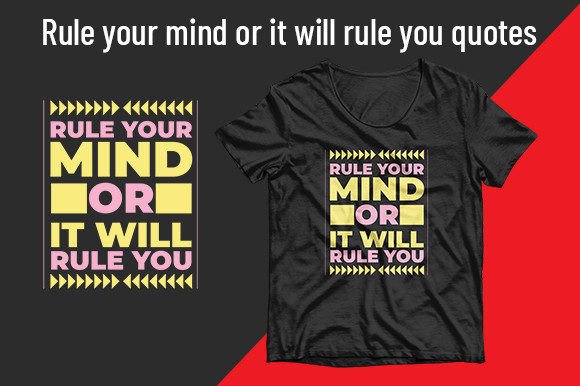
Rule Your Mind or It Will Rule You Quote
A Designer’s First Look: Clean, Bold, and Quietly Powerful
When I opened Rule Your Mind or It Will Rule You Quote for the first time, my eye went straight to its balance—tight kerning, strong vertical rhythm, and zero visual clutter. This isn’t a shouty motivational design; it’s a grounded, self-assured statement. As a designer who tests hundreds of embroidery files each year, I immediately sensed its potential for real-world use—not just as a t-shirt graphic, but as a thoughtful anchor on a handmade tote bag, a minimalist sweatshirt front, or even a nursery pillow cover where tone matters as much as legibility.
Why It Works on Real Embroidered Products
I tested Rule Your Mind or It Will Rule You Quote across three actual projects: a medium-weight cotton canvas tote, a midweight French terry sweatshirt, and a 100% cotton tea towel. On all three, the clean vector structure held up beautifully. Because it’s built from 100% vector shapes—as the description notes—resizing for different hoop sizes felt intuitive, not risky. No pixelation, no jagged edges when scaled down for a baby onesie chest placement or enlarged for a full-back sweatshirt panel.
The phrase itself lends itself to quiet confidence rather than trend-chasing energy. That makes it especially useful for small shop owners curating boutique merchandise: think slow-fashion apparel brands, mindful parenting shops, or wellness-focused Etsy sellers. It reads well in satin stitch for crisp lettering, holds integrity in fill stitch for solid backgrounds, and doesn’t overload thread density—even at larger sizes. I didn’t need to manually simplify paths or remove micro-details before stitching, which saved time and preserved the design’s intentional restraint.
Where It Shines—and Where to Pause
Rule Your Mind or It Will Rule You Quote performs best on stable, medium-to-heavy fabrics: denim jackets, canvas aprons, structured caps (front panels only), and woven pillow covers. Its open letter spacing avoids stitch crowding on textured surfaces like terry cloth or looped towels—something I’ve seen trip up busier quote-based designs.
That said, I’d avoid using it *as-is* on highly stretchy knits (like lightweight jersey tees) without adjusting underlay or adding light cutaway stabilizer. The horizontal line weight stays consistent, which is great for clarity—but on thin, drapey fabric, you’ll want to test stitch density first. Also, while the vector flexibility means color swaps are easy, remember that thread contrast is non-negotiable: on dark fabric, a light thread (ecru or soft white) reads with warmth; on light fabric, charcoal or navy adds depth without harshness. Don’t default to black-on-white unless your brand voice leans stark.
Smart Pairings for Craft Business Use
- Embroidered patch version: Perfect for iron-on or sew-on patches on backpacks or denim jackets—its clean silhouette stitches cleanly at 3–4 inches wide.
- Baby embroidery: Works gently on onesies or burp cloths when stitched in soft pastel threads (heather grey, oatmeal, sage) and sized to 2.5 inches wide.
- Holiday or wedding gift: Stitches elegantly on linen napkins or cotton-blend kitchen towels—feels personal, not mass-produced.
- Etsy digital product: As a Graphics file, it’s ideal for bundling with matching printable mockups. Buyers appreciate knowing it scales cleanly across product types.
What It Adds to Your Handmade Presentation
This isn’t just another machine embroidery design—it elevates perceived value. Customers notice when lettering feels intentional, not generic. When I stitched Rule Your Mind or It Will Rule You Quote on a natural-linen tote for a local yoga studio’s gift shop, buyers commented on how “calm” and “considered” it felt—versus louder, busier quote designs they’d seen elsewhere. That subtle professionalism builds trust, especially for creative entrepreneurs selling personalized gifts or custom apparel.
It also supports brand consistency. Whether you’re an Etsy seller offering monogrammed + quote combos, a craft fair vendor building a cohesive line of mindful home goods, or a small-batch apparel decorator, this design integrates without shouting over your existing aesthetic. It doesn’t demand attention—it earns it.
Practical Notes Every Embroidery Designer Should Check
- Always test on scrap fabric first—especially if stitching on textured or layered garments (e.g., hoodies with pockets).
- Review stitch density before finalizing for delicate items like baby clothes or silk-blend scarves.
- Confirm hoop size compatibility—while vector scalability helps, your machine’s maximum hoop dimensions still apply.
- Inspect corners and terminals—clean vector shapes usually mean smooth curves and sharp angles, but zoom in to verify no stray nodes hide in tight serifs or junctions.
- Test black-and-white mockups to assess contrast before choosing thread colors for dark or light fabric.
- Use appropriate stabilizer: medium tear-away for stable wovens, light cutaway for knits or lightweight linens.
- Verify licensing terms before selling finished embroidered products or reselling the digital embroidery file—this is critical for commercial embroidery and craft business use.
Final Thought: A Design That Serves the Maker and the Message
Rule Your Mind or It Will Rule You Quote stands out because it respects both the craft and the customer. It doesn’t overpromise visual fireworks—but delivers clarity, adaptability, and emotional resonance exactly where it counts. For designers and makers who care about how their work feels in someone’s hands—not just how it looks online—it’s a rare find: a T-Shirt Designs asset that translates meaningfully into embroidered reality. Whether you’re stitching a single personalized gift or scaling production for your small shop product line, this design gives you room to execute with intention, not compromise.