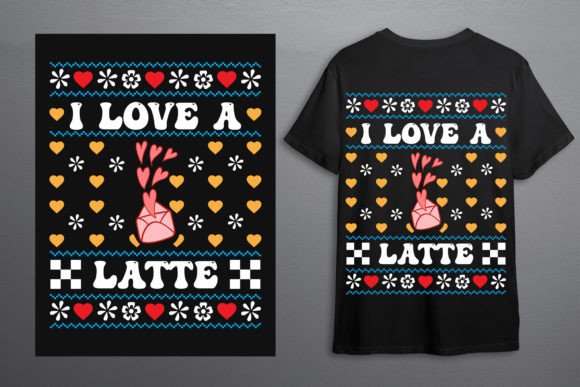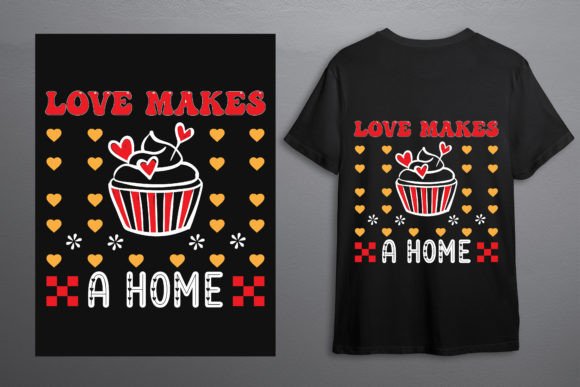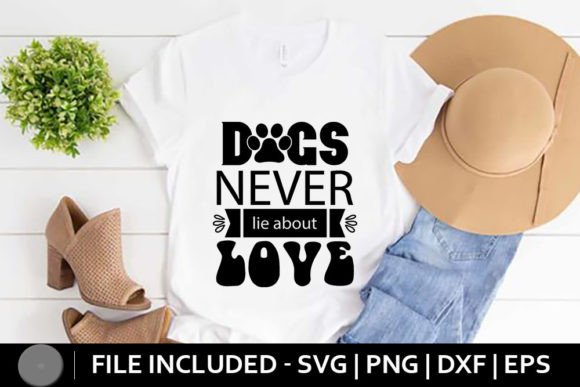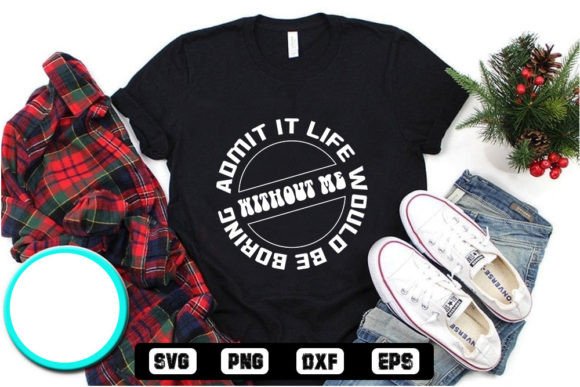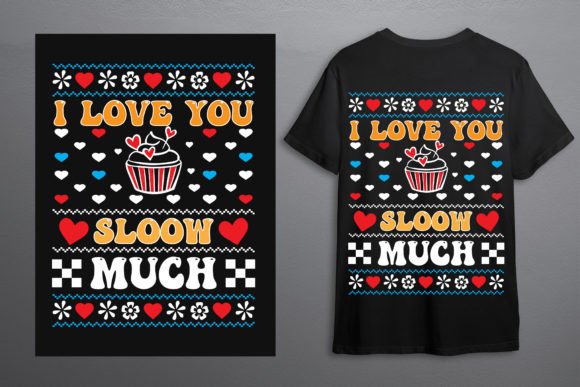
I Love You Sloow Much – Valentine Graphics for T-Shirt Designs
A Warm, Playful Pulse for Local Branding
As a brand designer who’s helped over 80 small businesses refine their visual voice—from artisanal candle studios to neighborhood bakeries—I opened I Love You Sloow Much - Valentine Svg expecting charm. What I found was something more intentional: a gentle, unhurried romance expressed through soft curves, slightly uneven letterforms, and generous negative space. It reads as handmade, heartfelt, and quietly confident—not saccharine or mass-produced. This isn’t a generic heart-and-arrow cliché; it’s a design asset with personality. It leans into warmth, sincerity, and approachability—ideal for local businesses that lead with authenticity: a lavender-scented skincare line, a slow-baked sourdough bakery, a children’s bookshop with curated gift wrap, or a florist specializing in seasonal, foraged arrangements.
Where This Graphic Design Asset Earns Its Keep
In real-world small business branding, I Love You Sloow Much - Valentine Svg shines where emotional resonance matters most. On product labels for honey jars or bath salts, it adds tactile charm without overwhelming ingredient lists. As a decorative accent on kraft paper packaging or linen hang tags, it reinforces a thoughtful, human-made ethos. For seasonal campaigns, it anchors social media graphics—think Instagram carousels announcing “Valentine’s Pre-Orders Open” or printable thank-you cards tucked inside coffee subscription boxes. It works beautifully in editorial design contexts too: as a hero graphic on a boutique’s website banner, a subtle watermark on recipe cards from a cooking school, or a playful element in a café’s chalkboard-style menu redesign.
Real Packaging & Promotional Use Cases
- Product labels: Scales well for 2”–4” label widths; pairs naturally with serif or rounded sans fonts for clarity.
- Packaging accents: Perfect as a foil-stamped detail on soap boxes or embossed on recycled gift tags.
- Social media graphics: The SVG and PNG files render crisply at multiple sizes—ideal for Stories, Reels thumbnails, and Pinterest pins.
- Printable designs: Works seamlessly in Canva templates for flyers, event posters, or limited-edition promo kits.
- Seasonal campaign visuals: Elevates “Valentine’s Day Special” signage in retail windows or farmers’ market tents without looking dated.
What This Design Asset Delivers for Local Business Credibility
Small business owners often underestimate how much visual consistency builds trust. When I Love You Sloow Much - Valentine Svg appears across a candle brand’s sticker-sealed jar, its Instagram bio highlight, and its hand-lettered in-store sign, customers subconsciously register cohesion—and care. That translates directly to stronger first impressions, improved shelf appeal (especially amid crowded craft fairs), and clearer visual hierarchy on busy packaging. It supports professional branding not by shouting, but by whispering confidence. For handmade businesses and food labels alike, it signals intentionality—no stock clipart energy here. And because it’s delivered in SVG, EPS, DXF, and PNG formats, you’re not locked into one platform or output method. That flexibility is gold for commercial design workflows.
Smart Usage Boundaries — Where Caution Applies
This graphic design asset thrives in expressive, emotionally driven contexts—but it’s not universally deployable. Avoid placing it on formal corporate branding materials like law firm stationery or medical product labeling. Steer clear of ultra-small labels (under 1”) where legibility suffers, or dense ingredient-heavy layouts where the phrase competes for attention. It shouldn’t sit atop low-contrast backgrounds (e.g., light gray text on beige packaging) without testing. Luxury minimalist brands may find its warmth too literal; similarly, avoid pairing it with overly ornate script fonts that muddy readability. If your brand voice is sharp, modern, or tech-forward, this design leans softer than you might need.
Practical Brand Designer Notes Before You Launch
- Test it on real packaging mockups—not just digital previews—to assess scale, spacing, and material interaction (e.g., how it looks on matte kraft vs. glossy sticker stock).
- Check black-and-white usage: Confirm the SVG retains clean edges when converted to monochrome for stamps or engraving.
- Preview at actual label size—especially if applying to jam jars, tea tins, or soap bars.
- Test alongside your core brand colors: Does it harmonize with your primary palette, or does it demand a seasonal color shift?
- Compare against competitor packaging—does it stand out authentically, or blend into expected Valentine tropes?
- Verify print quality: Run a test print of the EPS file on your preferred printer to check stroke weight fidelity.
- Inspect PNG transparency: Ensure the background is truly alpha-channel transparent for layered web or social use.
- Test font pairings: Try it beside serif (e.g., Merriweather), sans serif (e.g., Inter), script (e.g., Pacifico), handwritten (e.g., Qwigley), and display fonts (e.g., Bungee) to see where contrast and harmony land best.
- Confirm commercial licensing before using in client work, physical product sales, or any revenue-generating context—this is non-negotiable for ethical small business branding.
Final Thought: A Thoughtful Tool, Not a Magic Fix
I Love You Sloow Much - Valentine Svg isn’t a standalone logo solution—it’s a versatile, mood-aligned graphic design asset that gains power when anchored in a thoughtful brand identity. Used intentionally, it helps local businesses speak softly but memorably during high-emotion seasons. Whether you’re designing for a flower shop launching a “Slow Love” bouquet series or a children’s toy brand releasing heart-shaped wooden blocks, this asset delivers warmth without cliché, playfulness without noise, and craft without pretense. You’ll receive a zip file with SVG, PNG, EPS, and DXF files—ready for cutting machines, print production, web integration, and creative adaptation. Just remember: great small business branding doesn’t come from downloading a file. It comes from choosing the right file—and knowing exactly how, where, and why it earns its place.