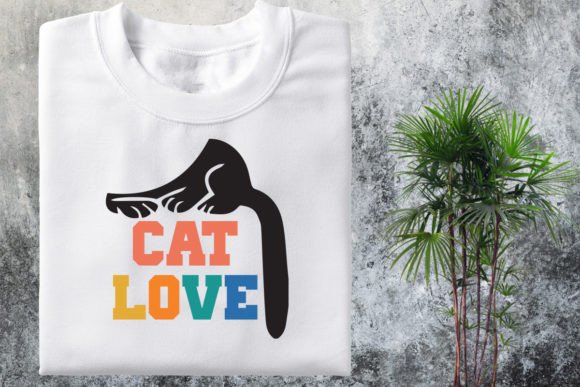
Cat T-Shirt Designs: Playful Graphics for Creative Projects
First Impression: Whimsy with Warmth, Not Just Cuteness
Opening Cat,T-Shirt Design,Cat,T-Shirt Design feels like flipping through a sketchbook of hand-drawn charm—soft linework, expressive feline silhouettes, and a gentle sense of narrative. It’s not hyper-polished vector perfection; it leans into approachable illustration, with subtle texture and intentional imperfection that reads as authentic, not amateurish. The mood is lighthearted but grounded—ideal for handmade businesses, pet-lover brands, or seasonal campaigns (think “National Cat Day” merch or boutique adoption events). This isn’t corporate mascot territory—it’s the kind of graphic design asset that builds emotional connection before a single word is read.
Fits Like a Well-Worn Tee: Where It Naturally Lands in Real Projects
I recently used Cat,T-Shirt Design,Cat,T-Shirt Design as the visual anchor for an Etsy shop relaunch focused on eco-friendly cat-themed stationery and tote bags. It worked seamlessly across touchpoints: scaled large for hero banners on their Shopify homepage, simplified for sticker sheets, and subtly repeated as a border motif on thank-you cards. Its versatility shines in print-on-demand workflows—especially for t-shirt design, mugs, and tote bags—where warmth and recognizability matter more than razor-sharp technical fidelity.
It holds up well in packaging design (as a corner accent on kraft mailers), social media graphics (Instagram carousels celebrating rescue stories), and Canva templates for small business owners needing ready-to-customize announcements. As a sublimation design, its mid-contrast lines translate cleanly onto ceramic and fabric. For Cricut projects, the clean cut paths (assuming SVG format) make it reliable for vinyl decals and iron-ons—no jagged edges or nested layers to troubleshoot.
Where It Elevates—And Where It Needs Guardrails
Best used in:
- Large layout areas—wall art prints, poster backdrops, event signage
- Product mockups—especially light-colored apparel and natural-fiber totes
- Decorative accents—repeating patterns, border elements, or background textures in editorial design
- Themed collections—paired with paw prints, yarn balls, or minimalist moon phases for cohesive brand storytelling
- Supporting brand elements—not as a logo, but as a secondary graphic reinforcing tone in email headers or blog sidebars
Use carefully when:
- Scaling below 1.5 inches—fine details (whiskers, ear texture) risk blurring on small stickers or embroidery
- Layering over busy or low-contrast backgrounds—its medium-weight line art needs breathing room
- Aligning with strict minimalist branding—this isn’t a Bauhaus monogram; it’s joyful clutter, not quiet precision
- Integrating into professional corporate materials—law firms or fintech dashboards won’t benefit from its personality
Design Judgment: Hierarchy, Trust, and Emotional Resonance
Cat,T-Shirt Design,Cat,T-Shirt Design strengthens visual hierarchy by acting as a focal point—not competing with typography, but framing it. In client work, that means pairing it with strong sans serif fonts (like Inter or Poppins) for balance, or leaning into contrast with a bold script font for greeting cards. It boosts brand consistency when used intentionally—not as filler, but as a recurring motif across digital and physical assets.
Crucially, it builds visual trust. Its handmade sensibility signals authenticity to audiences wary of stock imagery—valuable for small business branding and handmade business narratives. And emotionally? It delivers immediate warmth. That matters when designing for pet rescues, local cafes with resident cats, or wellness brands using feline metaphors for calm and independence.
Designer Notes: What You Must Check Before Client Use
Before dropping Cat,T-Shirt Design,Cat,T-Shirt Design into a live project, run these checks:
- Test in black and white—does the silhouette hold weight without color cues?
- Preview on both light and dark backgrounds—confirm contrast meets WCAG AA minimums if used in web or app interfaces
- Scale it down to 48px and up to 2000px—inspect for pixelation (PNG) or rendering quirks (SVG)
- Drop it onto real product mockups—not just flat previews, but draped t-shirts and curved mugs
- Run a test print—especially for sublimation or DTG—check ink bleed and edge sharpness
- Verify file formats—is there a transparent PNG? Editable SVG? Layered PSD? Missing formats limit flexibility
- Inspect transparency—no stray white pixels hiding in the PNG background
- Compare with your type system—does it harmonize with your serif, sans serif, script, and display fonts—or clash tonally?
- Confirm commercial licensing—this is non-negotiable. Does the license cover client work, resale, and print-on-demand? Never assume.
Final Verdict: A Thoughtful Addition to Your Creative Marketplace Toolkit
Cat,T-Shirt Design,Cat,T-Shirt Design isn’t a universal solution—but it’s a highly effective one within its lane. For designers building digital product bundles, launching Etsy product lines, or crafting marketing visuals for lifestyle brands, it’s a time-saving, mood-setting asset. It bridges the gap between generic clipart and custom illustration—offering personality without the $500+ price tag. When paired with smart typography, intentional spacing, and consistent color palettes, it transforms from a simple t-shirt design into part of a memorable brand identity. Just remember: great creative design isn’t about grabbing every asset—it’s about choosing the right one, testing it rigorously, and letting it serve the story—not the other way around.